GROWING NOTES
Give your tree a good beginning.
Choose the site first. Get the depth right. Make a plan for the weeks after planting.
EZTrees editorial guide · Reviewed 2026-09-26
Start with the place, not the planting hole
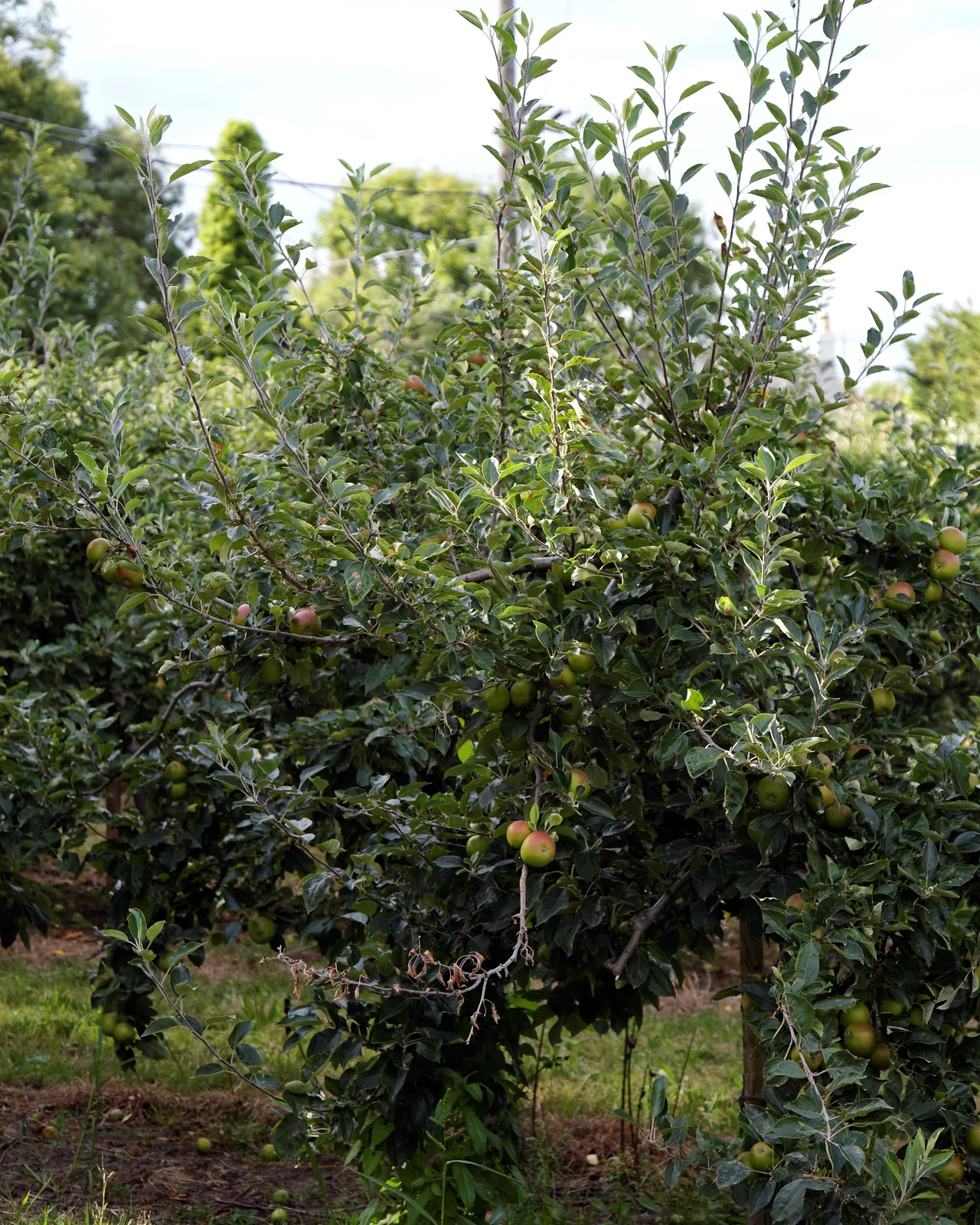
Watch how sunlight moves across the site and where water collects after rain. Check mature height and spread against buildings, paths, and overhead lines; locate underground services before digging. For fruit, confirm cultivar, rootstock, winter chill, and pollination needs before purchase. A promising nursery label cannot fix a shaded or waterlogged site. Choose the locally recommended planting season, when roots can establish without predictable extremes.
Prepare a wide, correctly measured hole
For most branching trees, find the root flare—the point where the trunk broadens into the main roots. It may be hidden beneath nursery soil. Measure planting depth from that point, leaving the flare at or slightly above finished grade. Make the hole at least twice as wide as the root ball, with a firm base that will not settle. Backfill mainly with the excavated soil; a pocket of heavily enriched mix does not correct poor drainage around it.
Treat palms as a separate planting job
Palm roots develop differently. Do not automatically cut wrapping container roots using broadleaf-tree instructions. Container palms and field-dug palms also need different depth checks: the root–shoot junction matters when container mix has settled, while field-grown palms generally return to their previous depth. Follow the species-specific nursery and extension instructions. Large field-grown palms, especially sabals, are best installed by people who understand their root regeneration and support needs.
Settle in, then keep watching
Support the root ball while moving the plant and address damaged or problematic roots according to plant type. Remove the container and restrictive ties, set the plant upright, backfill, and water thoroughly. A shallow layer of organic mulch helps protect the soil; keep it away from the trunk. Stake only when necessary for stability, using a system that will not rub or constrict the stem.
Make establishment part of planting
Before you put the tools away, decide how water will reach the root ball and who will check it. New roots take time to enter the surrounding soil. Inspect moisture often, adjust for rain and heat, and check that the plant has not settled too deeply. Photograph the plant and note its cultivar and planting date; those simple records make later changes easier to understand.
Further reading & sources
These guides draw on horticultural extension and botanical references. Local conditions and cultivars still matter.