GROWING NOTES
Make every cut count.
Fruit trees and palms need different care. Start with the plant's growth habit and a clear reason for each cut.
EZTrees editorial guide · Reviewed 2026-09-26
Know what you want to change
Stand back before picking up the pruners. Identify dead or damaged branches, rubbing growth, and the structure you want to keep. Pruning a young fruit tree establishes a framework; pruning a mature one manages light, access, and productive wood. Work from a species-specific plan. The same technique and season will not suit an apple, a peach, a citrus tree, and a palm.
Match timing to the crop
Dormant-season pruning is common for many deciduous fruit trees, but timing depends on climate, disease pressure, and species. Peaches are often trained to an open center, while apples commonly use a central leader. Fruiting wood also differs: careless removal can take away the next harvest. Citrus usually needs relatively little pruning. Use local seasonal guidance instead of copying a month from a garden in another hemisphere.
Use a clean cut in the right place
Keep cutting tools sharp and clean. On a branching tree, remove a branch just outside its collar, the slightly raised area where it joins a larger stem. Avoid flush cuts and long stubs. Larger branches need a staged cutting method so their weight does not tear bark. Do not top a tree to solve a space problem. Leave large limbs, overhead work, and anything near utility lines to qualified professionals.
Keep a palm's living crown
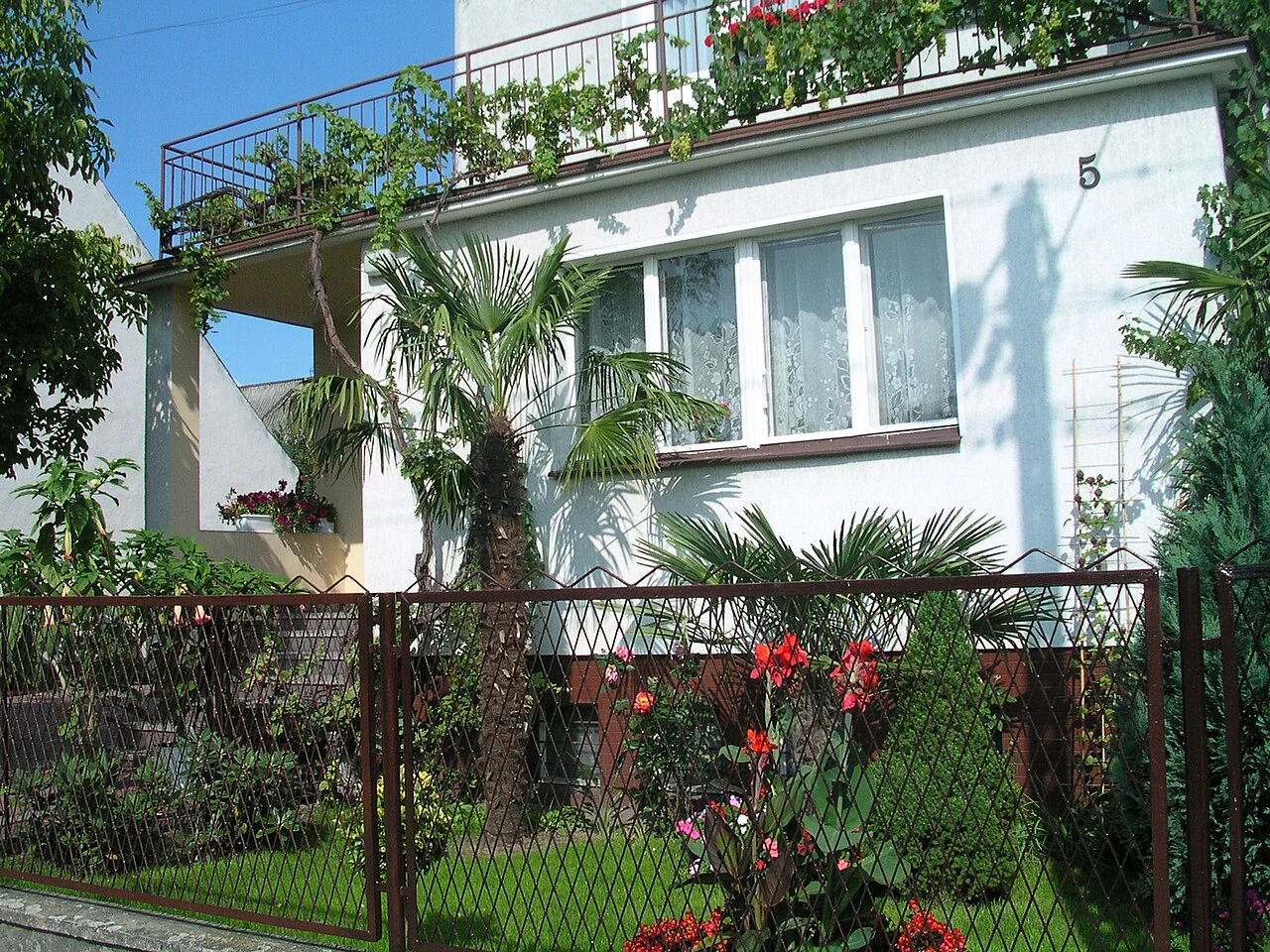
A palm cannot be shortened like a branching fruit tree. Protect the growing point and retain healthy green fronds. Routine removal of green or partly yellow leaves reduces the resources available to the palm; yellowing may signal a nutrient problem that pruning will not cure. Remove completely dead fronds as needed, and manage hazardous fruit stalks safely. Avoid severe 'hurricane' trimming and climbing spikes that wound the trunk.
Stop, look again, and follow up
Step back as you work rather than trying to remove everything in one session. Record what you cut and observe the next flush of growth. Fruit trees may also need fruit thinning, which serves a different purpose from branch pruning. If you see unusual dieback, a damaged crown, or unexplained yellowing, identify the cause before cutting more. A local extension office or qualified arborist can help turn those symptoms into a useful care decision.
Further reading & sources
These guides draw on horticultural extension and botanical references. Local conditions and cultivars still matter.