GROWING GUIDE / PALMS
Phoenix dactylifera
Date palm
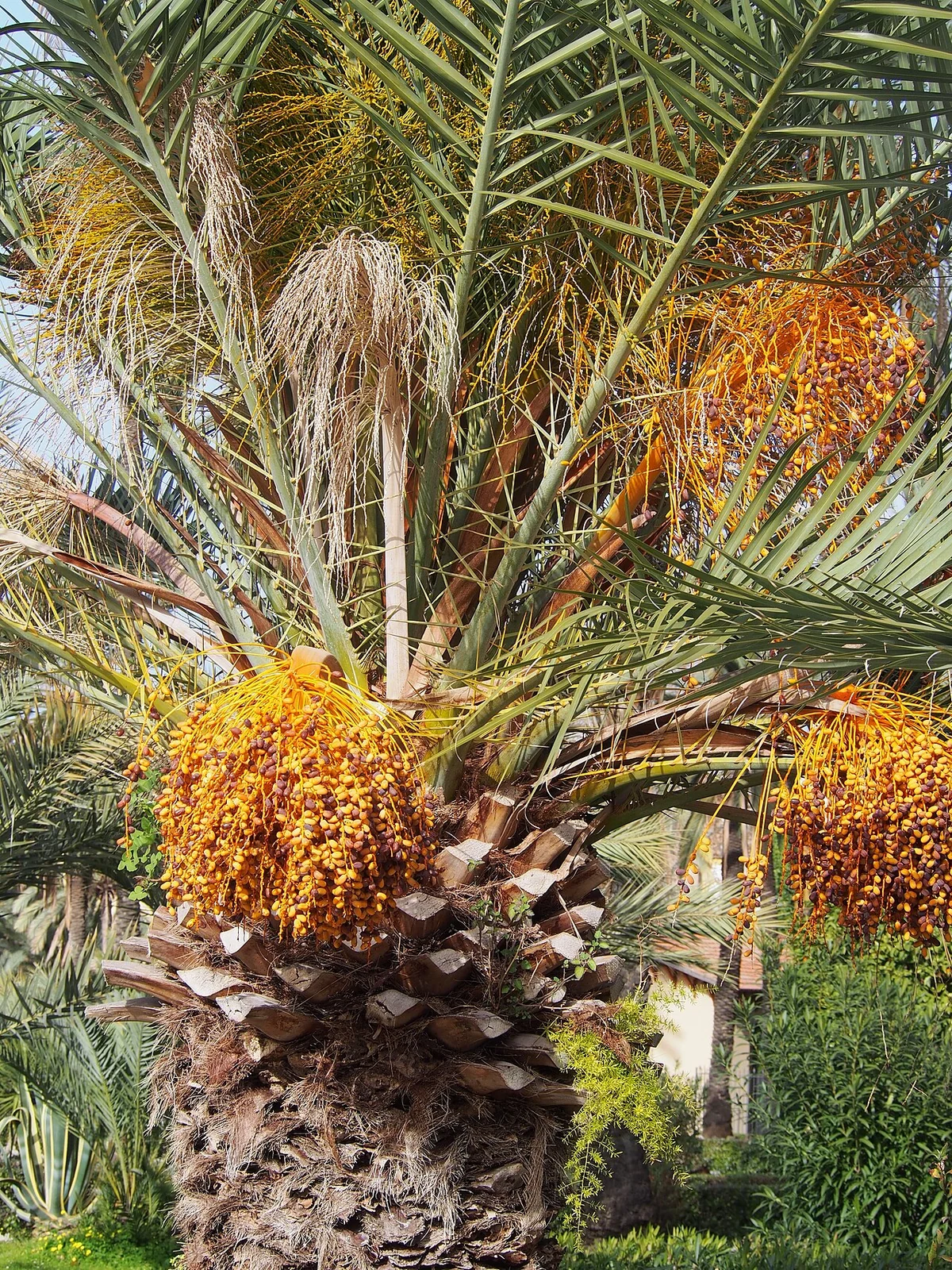
The true date palm is the species grown for familiar edible dates. Its blue-green, feather-like leaves and substantial crown make it a large landscape feature, distinct from both pygmy and Canary Island date palms.
EZTrees editorial guide · Reviewed 2026-09-26 · How we source our guides
Hot & dry
Full sun for best growth.
Commonly 50–60 ft (15–18 m) tall and 25–35 ft (7.5–11 m) wide; some specimens grow taller. This is a long-term choice for a large space.
Choose well-drained soil with space for roots and access for irrigation.
Right tree, right place.
Best adapted to sunny, low-humidity climates. A palm that grows as an ornamental in a wetter region may not produce a useful crop of ripe dates.
Choose well-drained soil with space for roots and access for irrigation.
Water for the roots.
Regular irrigation supports growth in dry climates. Drought survival and productive fruit growing require different levels of care.
A thoughtful approach to pruning.
Retain green fronds and remove dead ones safely. Offshoots can be managed to maintain the desired form; tall palms require professional access.
Flowers, pollination & fruit.
Male and female flowers grow on separate palms. A fruiting female needs a suitable pollen source; hand pollination is commonly used in production.
Worth remembering
Leaf bases carry strong spines, and fruit and old fronds create cleanup work. Plan access for pollination and harvest before planting a fruiting female near patios or paths.
Further reading & sources
These guides draw on horticultural extension and botanical references. Local conditions and cultivars still matter.